
Liquid crystal display, abbreviated as LCD, is a matrix display screen driven by thin film transistors. It uses current to stimulate liquid crystal molecules to generate points, lines, and planes, combined with LED backlight source to form a display image. Below, we will discuss the classification of LCD liquid crystal screens from multiple dimensions.
High-brightness display screen
LCD screen with brightness above 500cd/m2, suitable for display devices that need to be visible in outdoor sunlight.
Wide-viewing-angle liquid crystal screen
It has the characteristics of wide viewing angle, high contrast, color saturation, and dynamic clarity.
Wide-temperature liquid crystal screen
Suitable for use in places with harsh temperature conditions. The working temperature and storage temperature can reach -30℃ to +85℃, and the upper temperature limit of some models can reach 85℃.
Semi-transmissive screen
It has outstanding display effects in strong light conditions and excellent readability in non-light or low-light environments.
TN liquid crystal panel
The most basic and common display mode, with simple manufacturing process, high transmittance, and low cost.
IPS panel
Excellent full viewing angle characteristics, dynamic clarity, and color reproduction.
VA liquid crystal panel
With advantages such as wide viewing angle, high contrast, and no need for friction orientation, it has become the preferred choice for large-size TFT LCD panels.
The most common interfaces are RGB, SPI, MCU, MIPI, and LVDS. Others include HDMI, TTL, and STN interfaces.
There are three types: static drive, simple matrix drive, and active matrix drive.
Home appliance display, car display, commercial display, medical display, industrial display, instrument display, outdoor handheld display, etc.
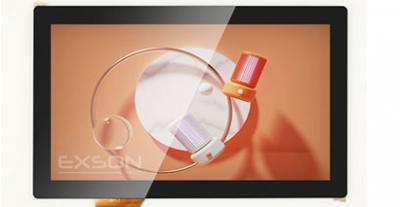
Exson provides touch and display solutions with OCA, OCR optical or air bonding, to meet your specific needs. We also integrate driver boards with HDMI, VGA, Lvds-mipi, eDP-Lvds, and other different inverters into integrated units. We also support open-frame design and manufacturing, including metal frame components, LVDS/ eDP/ FFC/ FPC/Ipex cables, and customized cables as required. Please feel free to contact us for inquiries.
 Exploring the Technology Behind Medical LCD DisplaysJanuary 25, 2024The advancements in medical technology have significantly transformed healthcare systems, with medical LCD displays playing a crucial role in enhancing patient care. These display panels are specially...view
 Exson Tech In-Vehicle LCD Module: Leading a New Chapter in Automotive DisplaysJuly 1, 2024In today's rapidly developing automotive industry, in-car displays have become a key element in enhancing the driving experience and intelligent level. Among many in-car display technologies, LCD ...view
 Characteristics and Advantages of LCD Bar-type LCD ScreensAugust 4, 2023The technology of LCD liquid crystal displays is developing rapidly, and LCD bar-type LCD screens are currently popular new products in the market. So what is a bar-type LCD screen?An LCD bar-type LCD...view
 Industrial LCD Screen PK Ordinary LCD ScreenDecember 9, 2022At present, the power consumption of liquid crystal displays is already very low, so they are loved by people in many applications, and are widely used in many sophisticated and long-lasting electroni...view
 The Crucial Role of Industrial TFT Displays in AutomationJanuary 29, 2024In the rapidly evolving landscape of industrial automation, technological advancements have become instrumental in enhancing efficiency, precision, and overall productivity. Among these innovations, I...view
 The Role of Touch Panel Modules in Modern DevicesJanuary 25, 2024In today's fast-paced world, technology plays a vital role in our everyday lives. From smartphones to tablets and even refrigerators, the integration of touch panel modules has revolutionized the ...view
 Call us on:
  Email Us:
  2F-M1 XiaWei Industrial Park, GuanLan, LongHua District, SZ, China
  www
www


